
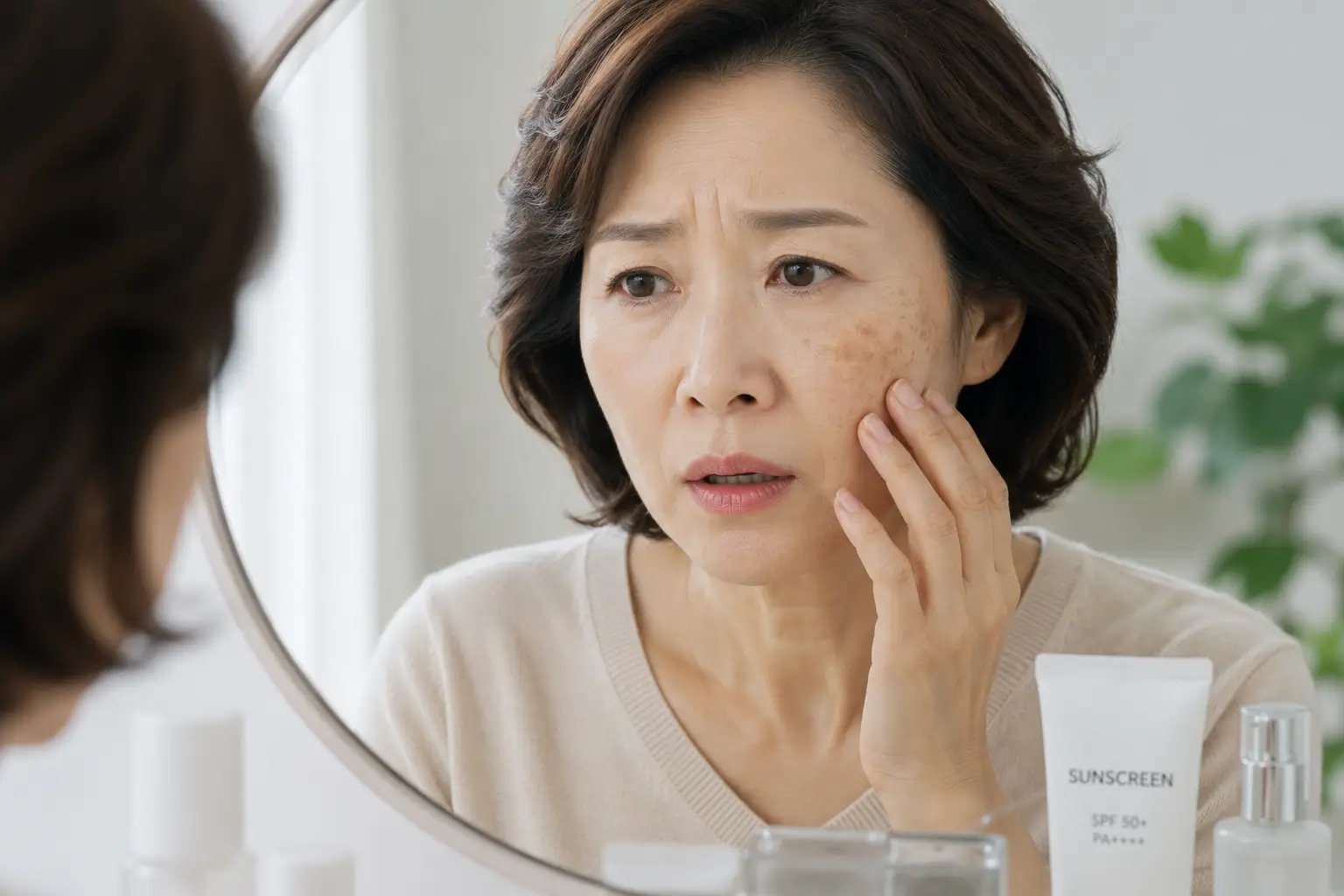
Why My Dark Spots Kept Getting Worse Even Though I Used Sunscreen
How Much Sunscreen Should You Really Apply?
For years, I thought I was doing the right thing.
I wore sunscreen almost every day. I rarely skipped it, especially after learning how important sun protection becomes as we get older.
Yet my dark spots seemed to get darker every year.
The pigmentation around my cheeks slowly became more noticeable, and after menopause it felt like those spots appeared even faster.
At first, I assumed sunscreen simply wasn’t working.
But after paying closer attention to my routine, I realized the problem wasn’t sunscreen itself. The problem was how I was using it.
The Mistake I Didn’t Realize I Was Making
Like many people, I was applying far less sunscreen than I thought.
For a long time, I used about one finger segment of sunscreen for my entire face.
It looked like enough.
It felt like enough.
But when I started reading more about proper sunscreen application, I realized I probably needed almost twice that amount.
These days, I use roughly double what I used before, and my skin feels much better protected.
Most people underestimate how much sunscreen they need. If you’re only applying a small amount, you may not actually be getting the SPF protection written on the bottle.
I Rarely Reapplied Sunscreen
The second mistake was even more important.
I applied sunscreen in the morning and assumed I was protected all day.
In reality, sunscreen gradually loses effectiveness over time.
If you’re outside, sweating, touching your face, or simply going through a normal day, protection decreases.
I wasn’t reapplying sunscreen, especially during long summer days.
Looking back, that was probably one reason my dark spots continued to appear despite using SPF every morning.
Menopause Changed My Skin
After menopause, my skin became noticeably drier.
It also seemed more reactive to sun exposure than before.
The dark spots that used to fade slowly now lingered much longer.
Many women notice similar changes after menopause because hormonal shifts can affect pigmentation, skin thickness, and overall skin resilience.
That’s when I became much more serious about sun protection.
My Experience With Retinoids
Another reason sunscreen became important for me was my use of prescription retinoid cream.
I started using it because enlarged pores around my nose and cheeks became much more visible after menopause.
The retinoid helped improve skin texture, but I quickly learned something important.
Retinoids make your skin more sensitive to sunlight.
I was told that skipping sunscreen while using retinoids could actually make pigmentation worse.
Since then, my morning routine has become very simple.
I gently cleanse my skin.
I apply moisturizer.
Then I apply sunscreen every single morning, whether I plan to leave the house or not.
This is the one skincare step I never skip.
The Sunscreens I Actually Use
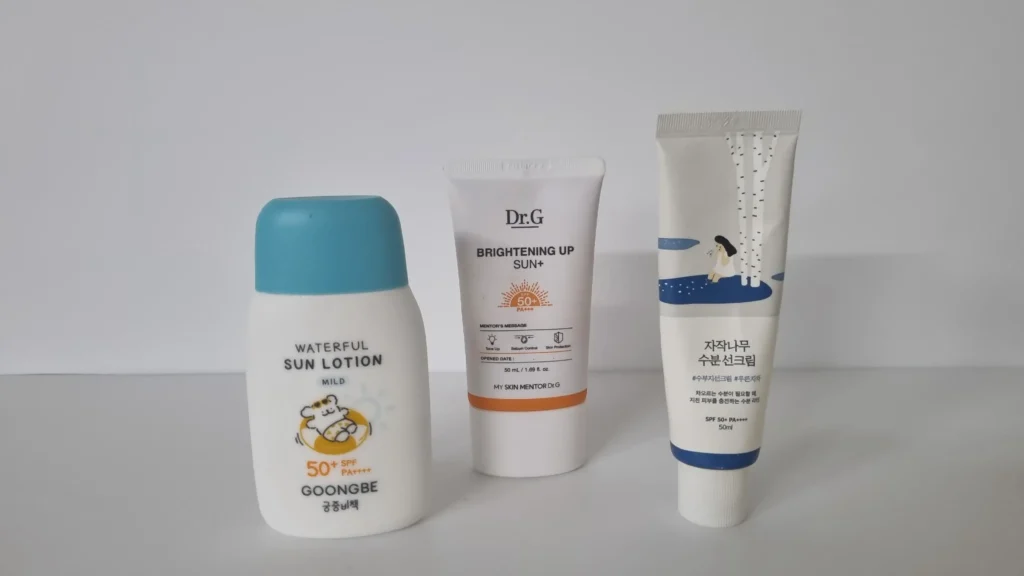
I rotate between three different sunscreens depending on the day.
For everyday use under makeup, I usually reach for Round Lab Birch Juice Moisturizing Sun Cream because it feels lightweight and hydrating.
When I want a little tone correction without foundation, I use Dr.G Brightening Up Sun+. It helps reduce the appearance of redness and gives my skin a brighter look.
On days when I feel lazy and want something very gentle, I often choose Goongbe Waterful Sun Lotion. It does leave a slight white cast, but I find it extremely mild and comfortable.
Sunscreen Helps, But It Isn’t Magic
One thing I have learned is that sunscreen is not magic.
Wearing sunscreen does not guarantee that you will never develop dark spots.
However, using enough sunscreen, applying it consistently, and reapplying when necessary can make a significant difference over time.
For me, the biggest lesson was simple.
There is a huge difference between wearing sunscreen and wearing enough sunscreen.
Final Thoughts
For years, I thought sunscreen wasn’t working because my dark spots kept appearing.
Now I believe the issue was not the sunscreen itself.
I wasn’t applying enough, and I wasn’t reapplying during the day.
These days, I still have dark spots, and I don’t expect perfect skin at 50.
But my pigmentation seems to develop much more slowly than before, and that’s enough reason for me to keep reaching for sunscreen every morning.
Sometimes the simplest skincare habits make the biggest difference.
FAQ
1. Why am I getting dark spots even though I wear sunscreen every day?
A: Sunscreen helps reduce UV damage, but many people do not apply enough sunscreen or forget to reapply it throughout the day. Hormonal changes, aging, and sun exposure accumulated over many years can also contribute to dark spots.
2. How much sunscreen should I apply to my face?
A: I personally found that using about twice the amount I used in the past worked much better. Many dermatologists recommend approximately two finger lengths of sunscreen for the face and neck combined.
3. Do I need sunscreen even if I stay indoors?
A: Yes. UVA rays can pass through windows, and incidental sun exposure throughout the day can contribute to skin aging and pigmentation over time.
4. Can retinoids make dark spots worse?
A: Retinoids themselves do not cause dark spots. In fact, they are often used to improve pigmentation. However, retinoids can make your skin more sensitive to sunlight, so daily sunscreen use becomes even more important.
5. Does menopause affect pigmentation?
A: Many women notice changes in their skin after menopause. Hormonal fluctuations can make pigmentation, dryness, and uneven skin tone more noticeable.
6. What sunscreen do I use most often?
A: I rotate between several Korean sunscreens depending on the day. I use Round Lab Birch Juice Moisturizing Sun Cream for everyday wear, Dr.G Brightening Up Sun+ when I want a natural tone-up effect, and Goongbe Waterful Sun Lotion on days when I want something especially gentle and easy to wear.
7. Can sunscreen completely prevent dark spots?
A: Unfortunately, no. Sunscreen can significantly reduce UV damage, but no sunscreen can block 100% of UV rays. Consistent use, adequate application, and reapplication are all important for long-term results.