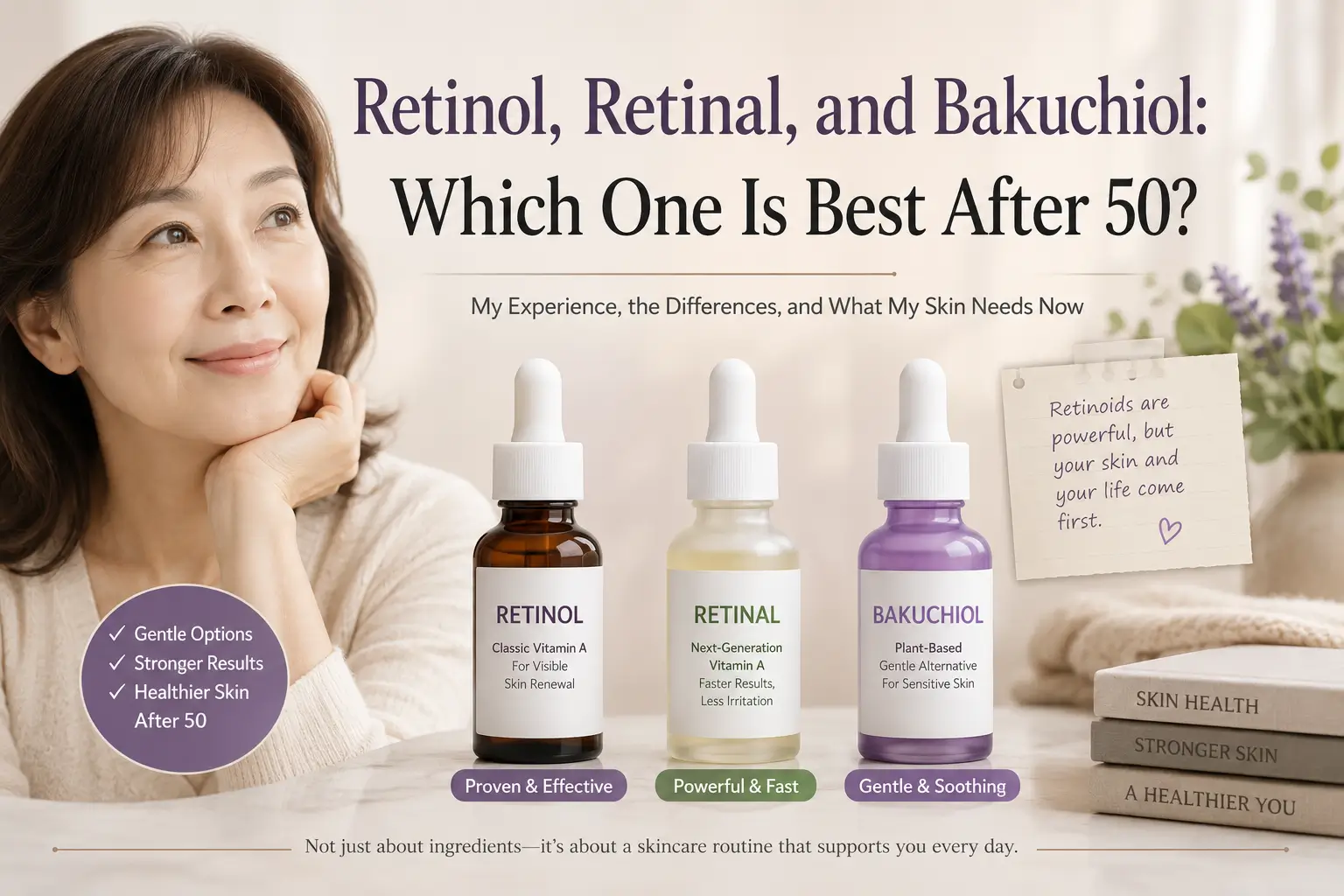
Retinol, Retinal, and Bakuchiol: Which One Is Best After 50?
Retinol, Retinal, and Bakuchiol
As I’ve gotten older, I’ve become much more interested in ingredients that support healthy aging rather than promise overnight results.
One ingredient that kept appearing everywhere was retinol.
Dermatologists, beauty influencers, and skincare enthusiasts all seemed to agree on one thing: vitamin A ingredients can help improve wrinkles, uneven skin texture, and enlarged pores.
Because my pores became much more noticeable after menopause, especially around my nose and cheeks, I eventually decided to try a prescription retinoid recommended by my dermatologist.
The results were encouraging, but the experience also taught me an important lesson.
The strongest ingredient isn’t always the best ingredient.
My Experience With Prescription Retinoids
After menopause, my skin changed in ways I didn’t expect.
My skin became drier, more sensitive, and my pores appeared larger than they had in my younger years.
I started using a prescription retinoid because it is often considered one of the most effective ingredients for improving skin texture and encouraging skin cell turnover.
Over time, I did notice smoother-looking skin.
However, I also experienced redness, peeling, and irritation.
To make the treatment more comfortable, I began mixing a small amount of retinoid with moisturizer and focused heavily on hydration and skin barrier care.
I also learned that sunscreen became even more important.
I had heard that retinoid-treated skin could become more vulnerable to sun damage, so my morning routine became very simple but consistent: gentle cleansing, moisturizer, and sunscreen every single day.
That routine helped my skin much more than using a strong ingredient alone.
What Is Retinol?
Retinol is one of the most popular vitamin A ingredients found in over-the-counter skincare products.
It is widely used to address:
- Fine lines
- Uneven skin tone
- Enlarged pores
- Rough skin texture
Many Korean skincare brands now offer retinol creams, serums, and ampoules that are designed for beginners.
Retinol is generally considered a good starting point because it is more accessible than prescription retinoids.
What Is Retinal?
Recently, another ingredient has been attracting attention in Korean skincare: retinal.
Retinal (also called retinaldehyde) belongs to the same vitamin A family as retinol.
Many skincare experts consider it a newer generation ingredient because it is closer to the active form used by the skin.
As a result, retinal products may deliver noticeable results while still being available without a prescription.
This is one reason many Korean skincare brands have started launching retinal products in recent years.
If I were looking for a non-prescription anti-aging product today, retinal would probably be the ingredient that interests me the most.
What Is Bakuchiol?
Then there is bakuchiol.
Bakuchiol is often described as a plant-based alternative to retinol.
Unlike retinol and retinal, it is not a vitamin A ingredient.
However, it has become increasingly popular among people who want a gentler approach to anti-aging skincare.
Many people with sensitive skin choose bakuchiol because it is generally less likely to cause redness, peeling, or irritation.
This ingredient has become especially popular among people who feel that traditional retinoids are too harsh for their skin.
Another reason bakuchiol has become so popular is that many people see it as a gentler alternative to retinol.
In Korea, it is often discussed among people with sensitive skin and among women who are looking for alternatives to traditional retinoids. It is also frequently mentioned in conversations about pregnancy-safe skincare because retinoids are generally avoided during pregnancy.
That said, bakuchiol is not actually a retinoid, and research on its safety during pregnancy is still limited. For that reason, anyone who is pregnant should always consult their healthcare provider before introducing new active ingredients into their routine.
What makes bakuchiol interesting is that it may help improve skin texture and the appearance of fine lines while causing less redness, peeling, and irritation than retinol. For people who struggle with retinoid side effects, that can be very appealing.
Popular Korean Retinal and Bakuchiol Products
Although I haven’t personally tried these products, they are among the Korean skincare products that are frequently recommended by K-beauty enthusiasts.
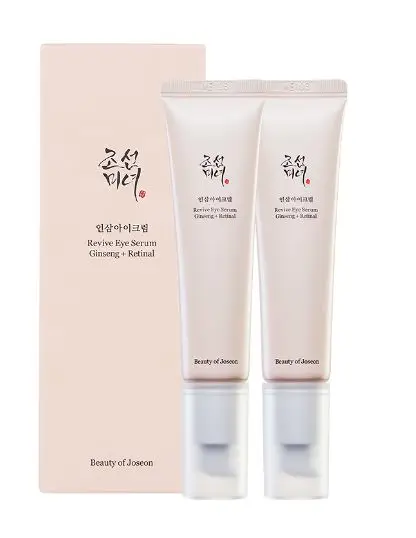
One of the most popular Korean retinal products right now is the Beauty of Joseon Revive Eye Serum: Ginseng + Retinal. It combines retinal with nourishing ingredients and is often recommended for people who want visible anti-aging benefits without starting with a stronger prescription product.
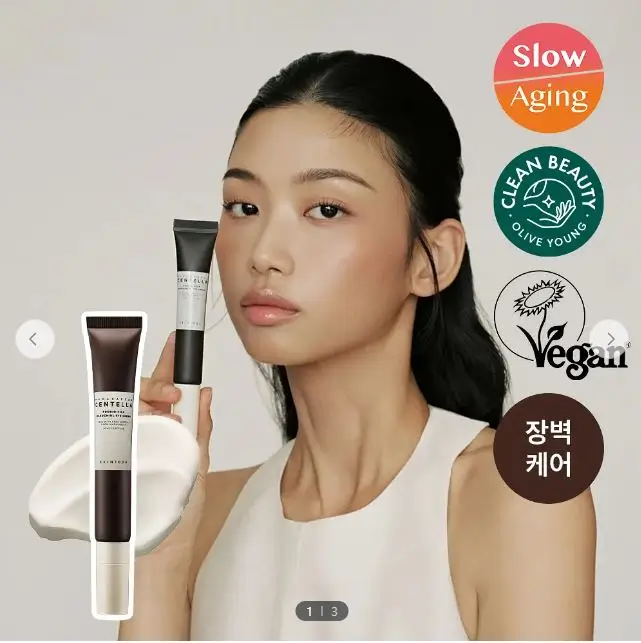
For bakuchiol, one of the best-known Korean products is the SKIN1004 Probio-Cica Bakuchiol Eye Cream. It is often chosen by people with sensitive skin who want a gentler alternative to traditional retinoids.
Personally, I still rely on my prescription retinoid, moisturizer, and sunscreen routine. But if I ever decided to try a newer over-the-counter option, retinal would probably be the first ingredient I would look at.
Which One Is Best After 50?
There is no single answer.
The best ingredient depends on your skin type, your goals, and your tolerance for active ingredients.
If your skin is very sensitive, bakuchiol may be a comfortable starting point.
Personally, I understand why bakuchiol has become so popular.
When I first started using prescription retinoids, I experienced redness, peeling, and irritation. Although I continued because I liked the results, not everyone wants to deal with that adjustment period.
If someone told me they had very sensitive skin or were nervous about using retinol for the first time, bakuchiol would probably be the ingredient I would suggest looking into first.
If you want stronger results from a non-prescription product, retinal is one of the most exciting options available today.
If you already tolerate vitamin A ingredients well, retinol remains a reliable and well-researched choice.
As for me, I still use a prescription retinoid from time to time.
But my biggest skincare lesson after 50 is that hydration, skin barrier care, and sunscreen are just as important as any active ingredient.
What Actually Made the Biggest Difference for My Skin
When I look back, the improvements in my skin did not come from one miracle product.
They came from consistent habits.
For me, those habits include:
- Daily sunscreen
- Moisturizer every morning and evening
- Skin barrier support when my skin feels irritated
- D-Panthenol cream when needed
- Careful use of retinoids
- Avoiding overly complicated routines
These habits have helped my skin far more than constantly chasing the newest trend.
Final Thoughts
Retinol, retinal, and bakuchiol all have a place in modern skincare.
The question isn’t which ingredient is strongest.
The better question is which ingredient you can use consistently and comfortably.
After 50, I’ve learned that healthy aging is less about finding a miracle ingredient and more about building simple habits that support your skin every day.
Internal Links
The One Skincare Step I Never Skip — Even When I Stay Home
Why My Dark Spots Kept Getting Worse Even Though I Used Sunscreen
Why I Sometimes Use Moisturizer Like a Face Mask
Why Korean Women Over 50 Care More About Skin Barrier Than Wrinkles